These smart home FAQs cover the basics for Dubai homes: what a smart home is, wired or wireless, and cloud or local control. In short, wireless suits most finished apartments and renovations, and wired KNX suits new villas.
A well-designed system also keeps your everyday controls working without the internet. Each answer below starts with the short version, then explains what it depends on.
What is a smart home?
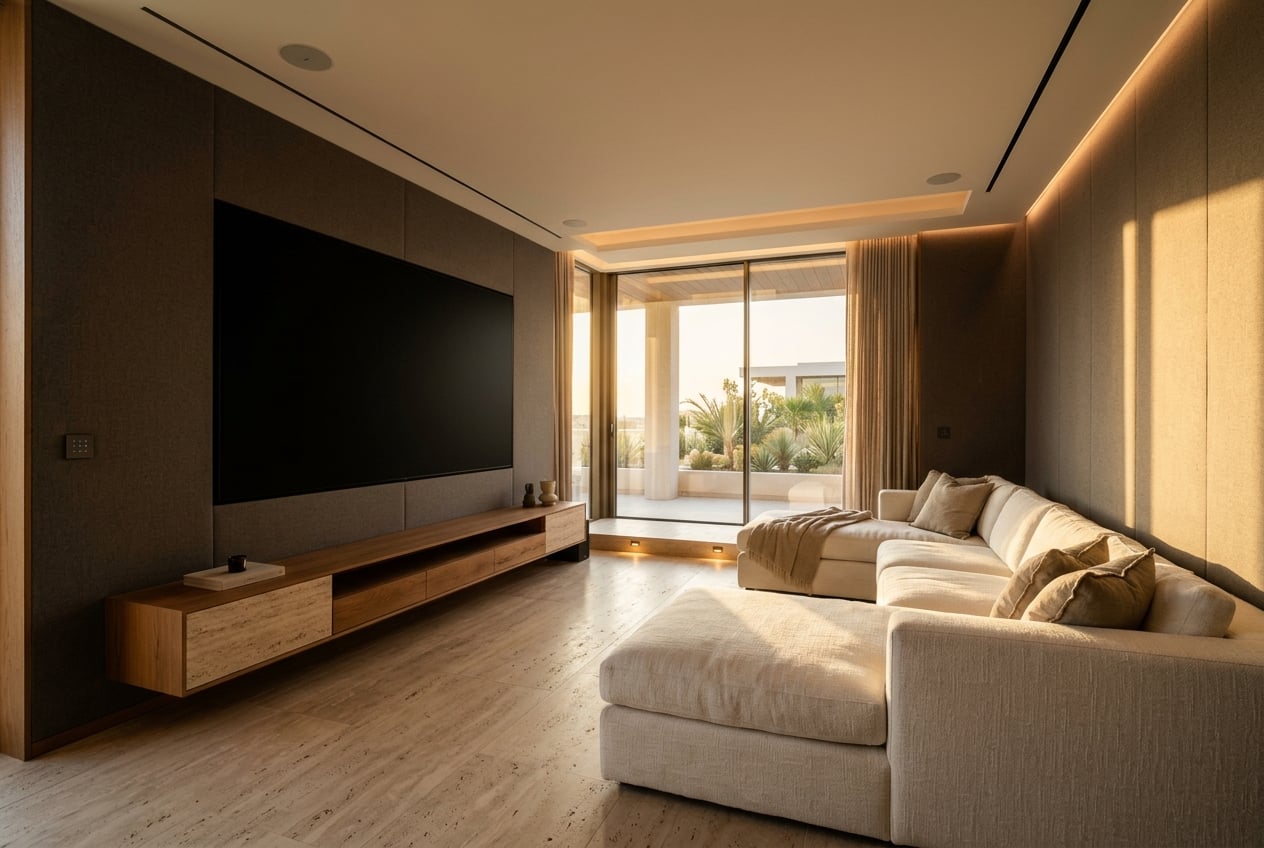
A smart home links your lighting, AC, curtains and blinds, security and other systems. You control them from switches, keypads, the app or a schedule. In Dubai, most people start with lighting, AC and curtains, then add cameras, smart locks, leak sensors or audio.
The hub, the small box that runs your system, ties it all together. Ours is Symphony, Avario's own automation platform, designed to make large, complex homes easier to manage.
In daily life, it looks like this:
- You press "Evening" on a keypad and the living room lights dim to a set level.
- Blinds close by themselves at sunset, or when a light sensor picks up strong sun.
- The AC starts cooling your bedroom before you get home.
- Opening the front door with your code switches on the hall lights and sets the AC.
- Your phone gets an alert if the leak sensor under the sink gets wet.
What is the difference between wired and wireless?
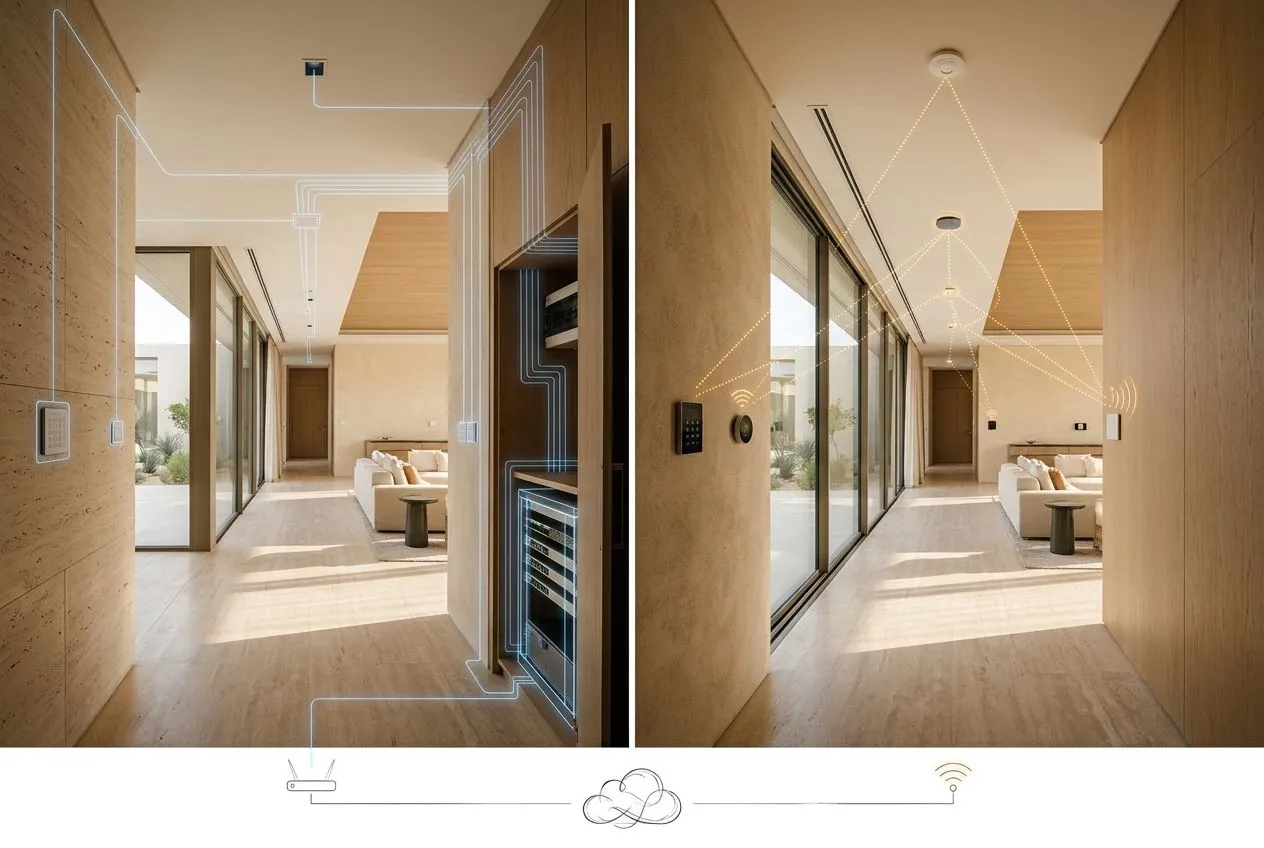
A wired system links every switch, keypad and device with its own control cable. A wireless system sends commands by radio, so it needs little or no new cabling.
Most wired systems we install use KNX, an open international standard for home and building control (ISO/IEC 14543-3). Because the standard is open, devices from different manufacturers can be programmed to work together. Our engineers are KNX certified, and Avario is a registered KNX Partner.
For wireless, we use Zigbee. It is a low-power radio standard where devices pass signals on to each other to form a mesh. In our experience it is the best wireless choice for homes in the UAE. Curtain and blind motors can also run on Somfy's own radio system, or be wired.
- Wired KNX: control travels along a cable, so it does not depend on radio signals getting through concrete walls. It is best planned before walls and ceilings are closed, and harder to add to a finished home.
- Wireless (Zigbee): little or no new cabling, and usually installed in a couple of days. Because it relies on radio, our engineer has to plan carefully where each device goes.
Which should I choose for my home?
It depends on two things: whether your walls are open or closed, and how big your home is. Here is what we usually advise.
Our guide to wireless smart homes explains in more detail when wireless works and when to wire. Our KNX automation guide covers the wired option.
- New villa build of three bedrooms or more: we advise wired KNX. The cable goes in during the build. Our team can install it, or we work with your MEP contractor (the firm handling mechanical, electrical and plumbing work).
- Finished apartment or villa you don't want to open up: wireless is usually the simplest route.
- Apartment that is not KNX ready: wired only makes sense during a major renovation, when walls and ceilings are already open.
- One-bedroom apartment with a few lights and one AC unit: a good DIY kit may be all you need.
What does cloud or local control mean?
A cloud system sends your commands through a company's servers on the internet. A local system runs in your home, on the hub. It only needs the internet for extras such as control from outside the house.
Some DIY devices depend on the cloud. They are easy to set up, but if those servers go down, so do they. On 20 October 2025, Amazon Web Services (AWS), the cloud service behind many apps, had a major outage. Many Alexa and Ring devices stopped responding until it was fixed.
We design systems so the things you use every day run in your home. The internet is there for remote access, alerts and updates. You don't need it to switch on a light.
What still works if the internet goes down?
Your keypads and switches keep working even if your home network is down. Sometimes only the internet is down and your home Wi-Fi still works. In that case you can also use the Avario app on your phone at home.
These keep running in your home too:
- Blind schedules linked to sunrise, sunset or a light sensor.
- Irrigation schedules on the Rain Bird and Hunter controllers we connect.
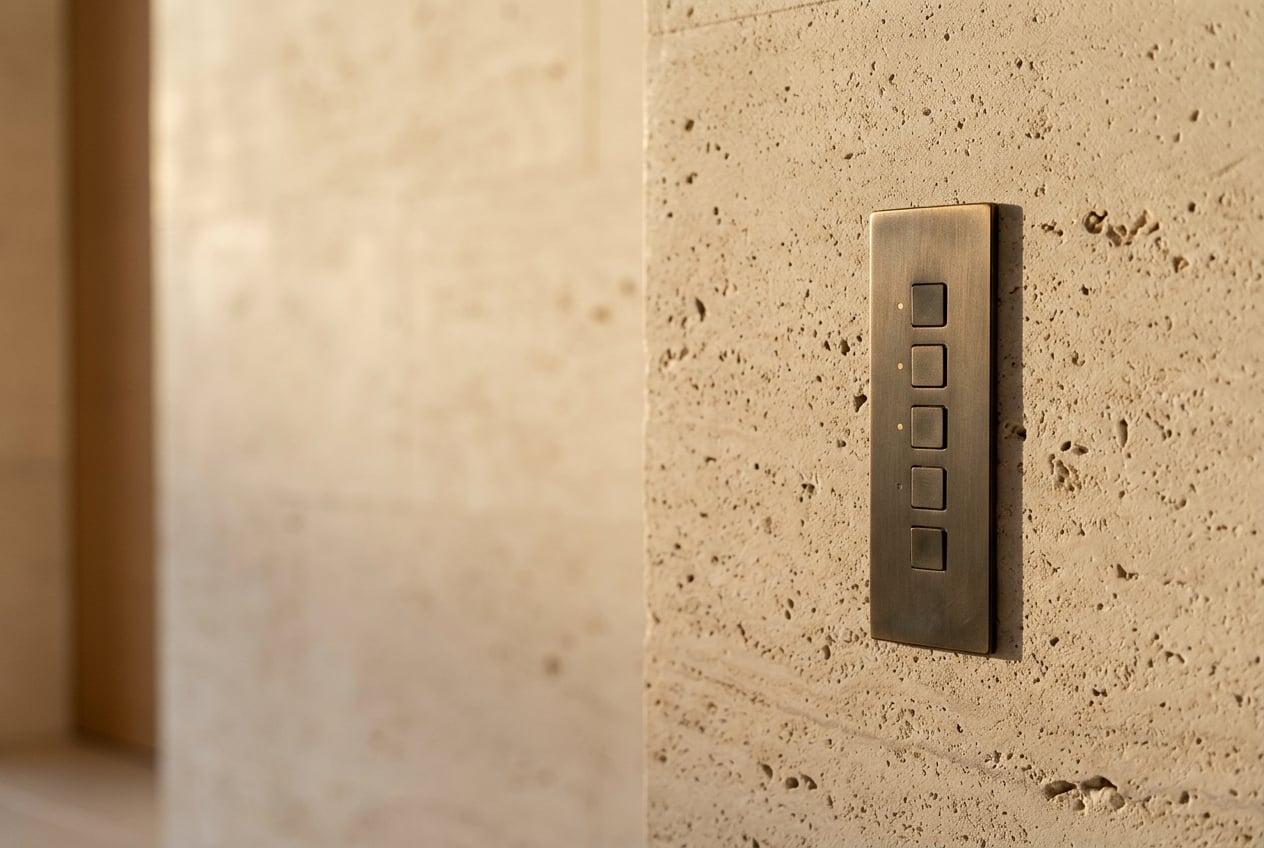
- Smart lock keypads and fingerprint readers. Only remote opening from your phone stops until the internet is back.
- Camera recording, because footage is saved on a recorder in your home.
Who controls my system and my data?
You do. Camera footage stays in your home, with cloud backup only if you choose it. When our team gives remote support, you approve each session, and you can switch remote access off completely.
On KNX systems we give you the ETS project file and passwords at handover as standard. ETS is the KNX Association's official software for setting up and programming KNX systems. Without that file nobody can change or upgrade the system. People who move into a home with an older system often find it missing.
Our guide to privacy and offline control explains how to keep your smart home local.
What affects the cost of a smart home?
Cost depends on the size of your home, how much you want to control and which system type suits it. A separate budgeting guide will cover figures. These are the things that change them:
- The size of your home and the number of rooms.
- Wired KNX or wireless.
- New build, or renovation of a finished home.
- How much you control: lighting only, or AC, curtains, security and audio too.
- The switches, keypads and devices you choose. We offer products from 18 high-end suppliers.
What happens at a home visit?
Our engineer comes to your home, looks at it and talks through what you want to control. If you message or email us, our team gets in touch the next business day to arrange it. You usually get a written quote 2 days after the visit.
When you book, tell us what you want to control. Add any equipment you already have and your privacy preferences. Then our engineer arrives prepared.
Comparing several companies? Our guide on how to choose a smart home company lists the questions to ask each one.
Designing a home for a client?
Bring us in at the early design stage, before walls and ceilings are closed. That way cable routes, keypad positions and curtain pockets get planned once, and we work from your drawings.
We provide lighting design or work with your lighting contractor. We also work alongside the curtain suppliers you already use. We can bring switch plate samples to you and your client.
To talk through how a project with us runs, call our team on +971 4 458 2205.
Questions people ask
Can you take over a system another company installed? Yes. If nobody has the passwords or programming file, we rebuild the configuration and you always keep a copy. On wired systems where the old installer has gone, we rebuild the setup and replace the hub with Symphony.
How long does installation take? A wireless system usually takes a couple of days. A wired system goes in alongside the build, or during a major renovation.
Can you give an estimate before a visit? Yes. From floor plans or drawings, for example for an off-plan home, we can prepare a budgetary estimate.
Who do I contact if something goes wrong? Use the support chat in the Avario app, Monday to Saturday, 8am to 7pm. If another company installed your system and you don't have our app, call us on +971 4 458 2205.
Can I speak to someone you have done work for? Yes. We can put you in touch with a past client, with that client's permission.
Ready to talk about your home?
The simplest next step is a home visit: our engineer sees your home, and you get a written quote. Book a home visit or engineering survey, or call us on +971 4 458 2205.