A water leak detection system in Dubai uses small wireless sensors to spot water on the floor and send an alert to your phone. If you add a motorised shut-off valve on your water supply, the system can close it. The leak then stops at the valve and does not run until someone gets home.
This guide explains how the parts work together and where the sensors go. It also covers how much protection you need, what happens when the internet drops, and what changes between a new build and an existing home.
How does leak detection and automatic shut-off work?
Three parts do the work: the sensors, the hub and the valve.
We use wireless leak sensors from Ubiquiti's UniFi Protect range, paired with motorised valves from other manufacturers. The sensors are wireless, so they can go where you need them without new cables.
Alerts come through the app only. We do not run a monitoring centre in Dubai, so the alert comes to you. No team responds on your behalf.
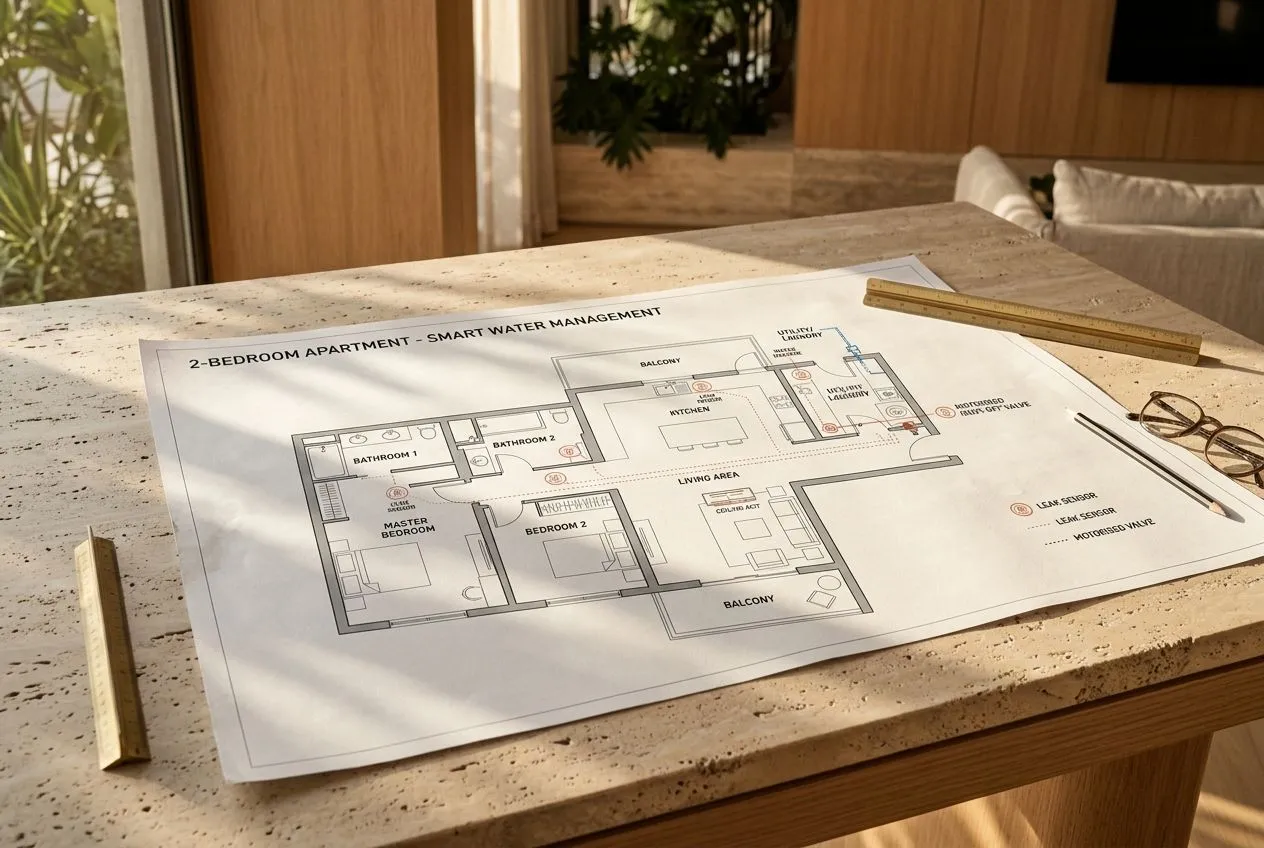
- Leak sensors: small battery-powered sensors that sit on the floor. When water touches one, it sends a wireless signal.
- The hub: the small box that runs your system. It receives the signal, sends an alert to the app on your phone and can sound a siren.
- The shut-off valve: a motorised valve fitted on the pipe that brings water into your home. When the hub tells it to, it closes and stops the supply.
How much leak protection do you need?
It depends on how long your home sits empty and what is below it. We set up water sensing at several levels, from a simple alarm up to closing the valve automatically.
At the home visit, our engineer talks you through the levels in between and sets up the one that suits how you use your home.
- A simple alarm: a sensor gets wet, the app alerts you and a siren can sound. Someone still has to close the water supply by hand.
- Automatic shut-off: a sensor gets wet, the system alerts you and closes the motorised valve on your supply.
Where should leak sensors go in a Dubai home?
Put a sensor wherever water can escape without anyone seeing it. In most Dubai villas and apartments, that means these spots:
A sensor only knows about water that reaches it. A slow leak inside a wall stays hidden until the water shows on the floor, so where you put each sensor matters.
- Under the kitchen sink and next to the dishwasher
- Behind the washing machine
- Beside the water heater
- Under bathroom basins and next to toilets, where supply hoses can split
- Below AC units in ceilings or cupboards, where a blocked condensate drain (the pipe that carries away water from cooling) can overflow the drip tray
- Next to water pumps and tanks, in villas that have them
Why does it matter most when you are away over summer?
A leak you find within the hour usually means a mop and some towels. One that runs for three weeks while you are abroad can soak floors, ceilings and the apartment below.
Summer is when many Dubai homes sit empty, often with the AC left running to keep heat and humidity down. Its condensate drains keep working too, so a blockage can keep leaking with nobody home.
With a shut-off valve, the system stops the supply when a sensor gets wet. Without one you still get the alert, but someone has to reach your home and close the stopcock by hand.
If you rent out your home or leave it empty for long spells, our guide to smart homes for holiday homes and rental landlords covers the other things you can control from abroad.
What happens if the internet goes down?
Your system runs in your home, and your data stays there. What needs the internet is the alert reaching your phone while you are away.
Whether the siren and the automatic valve keep working without the internet depends on how we configure your system and what you need it to do. We agree this with you at the design stage.
So plan for the gap. Decide who has a key and can get to your home quickly if the app tells you something is wrong.
If you want the shut-off to work in every situation you can think of, tell our engineer at the home visit. They will explain which set-up covers it in your home.
Can you add a shut-off valve to an existing villa or apartment?
Yes. Sensors suit any home because they are wireless, but the valve is plumbing work, so timing makes a difference.
We work with the MEP contractor (the mechanical, electrical and plumbing contractor) on your project to fit the valve. If you live in a finished apartment and have no MEP contractor, we arrange one.
Our engineer checks how water reaches your home before suggesting where the valve goes. A villa with its own tank and pump can need a different position from an apartment on a shared supply.
- New build or major renovation: the valve goes in while the pipework is open. This is the simplest time to fit it.
- Finished home: the plumber has to cut into the existing supply pipe. That is more work, so each valve costs more.
What affects the cost of leak protection?
The cost depends mostly on how many sensors you need, whether you add a valve, and when it goes in. These are the main factors:
Our engineer looks at all of this at the home visit. You then get a written quote, usually within 2 days.
- The size of your home and how many wet areas it has: kitchens, bathrooms, laundry, AC units and plant rooms
- Sensors with a simple alarm, or sensors with one or more shut-off valves
- New build or retrofit: a valve fitted during construction costs much less than one fitted into finished pipework
- Whether leak protection joins your cameras, alarm and the rest of your smart home
Can leak detection link to cameras and alarms?
Yes. Our leak sensors belong to the same UniFi Protect system we use for cameras, intercoms and alarms, so all their alerts arrive in one app.
If you are planning cameras or an alarm as well, read our guide to home security, CCTV and access control before your home visit.
How do you keep leak sensors working?
Check them and change their batteries on a schedule. Wireless sensors run on batteries, and a sensor with a flat battery cannot warn you.
The app helps here. It runs a watchdog, a dedicated system that checks everything is running as it should, and it warns you when a sensor's battery is low or the sensor loses its wireless signal.
Our servicing plans include checking leak sensors and replacing their batteries. Each plan is built around what your home needs. See smart home repair and maintenance for how it works.
Before a long trip, test one sensor yourself. Put a little water on it and confirm the alert reaches your phone. If you have a valve, check that it closes, then dry the sensor and reopen the supply.
For contractors, developers, interior designers and architects: when should leak protection be planned?
Plan the shut-off valve at the pipework stage. It is far easier and less costly to fit while walls and ceilings are still open.
We work with your MEP team on where the valve goes. Because the sensors are wireless, they can be placed late in the fit-out. See how we work with contractors, developers, designers and installers.
Questions people ask
Do I need a shut-off valve, or are sensors enough? Sensors tell you about a leak but cannot stop it. If your home sits empty for weeks, or there is a home below yours, the valve is what stops the water while you are away.
Will anyone respond if I miss the alert? No. Alerts come through the app only, as we do not have a monitoring centre in Dubai, so make sure someone nearby has a key.
Will I know if a sensor stops working? Yes. The app's watchdog warns you when a sensor's battery is low or it loses its wireless signal.
Do leak sensors need new cables? No. All the leak sensors we fit are wireless. Only the valve needs plumbing work, which we arrange with your MEP contractor or, in a finished apartment without one, a contractor we find for you.
Your next step: book a home visit or engineering survey. Our engineer checks where water could escape in your home and where a valve could go, and you get a written quote.